
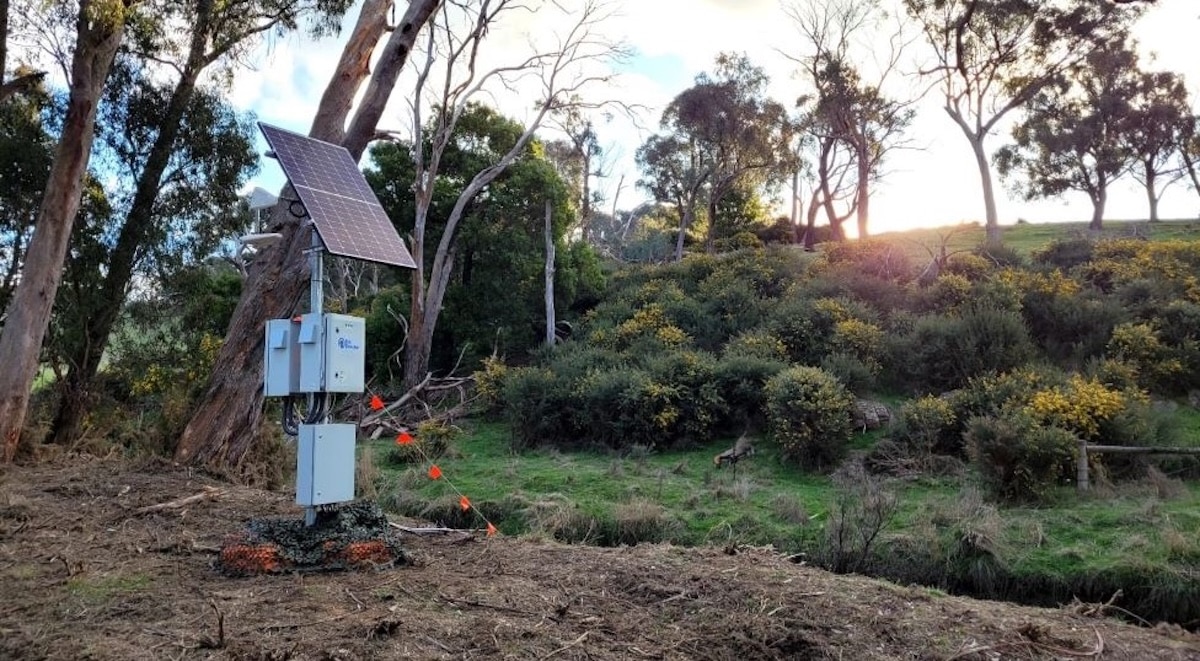
Eco Detection’s Founder and Executive Director, Jefferson Harcourt highlights the need to utilise nutrient offsetting for a cleaner and sustainable future of our water in the latest edition of Inside Water.
Nutrient offsetting in Australia is moving from theory to practice. Eco Detection’s Jefferson Harcourt explains how trading schemes might protect rivers while lowering compliance costs.
Nutrient pollution rarely makes front-page news, yet it silently undermines the health of rivers, bays and estuaries.
Rising loads of nitrogen and phosphorus fuel algal blooms, damage aquatic life and cost communities millions in remediation.
For residents, these problems often appear suddenly, whether it is a closed beach, a fish kill, or a warning sign near a local waterway; however, the causes are often long in the making.
Managing these impacts has traditionally relied on regulation, with limits placed on the amount of discharge that industry, agriculture, or utilities may emit. This approach is practical to a point, but it can also be blunt and costly.
Some sectors find it relatively easy to reduce their nutrient use, while others face steep expenses for marginal gains. That imbalance is driving interest in alternative approaches that can reward efficiency and innovation.
One approach is gaining momentum: nutrient offsetting.
Rather than mandating uniform reductions, polluters and land managers could trade credits for proven improvements in water quality. The model has parallels with carbon trading, but the outcomes are measured in cleaner rivers and bays rather than lower emissions.
Eco Detection Executive Director Jefferson Harcourt believes the time has come for Australia to consider nutrient offsetting not as theory, but as a practical approach.
Trading for cleaner rivers
At its core, nutrient offsetting creates a market where pollution reductions become tradable assets.
Harcourt said the principle is straightforward.
“I think of nutrient offsetting as creating incentives where one party that can reduce nutrients cheaply does so, then provides credits to another party that finds reductions more expensive,” he said. “It does not replace regulation, but it adds flexibility and efficiency to how targets are met.”
The urgency comes from the state of Australian waterways. Population growth, intensive agriculture and urban runoff all contribute to rising nutrient loads.
“We cannot continue to rely on rainfall and natural flushing,” Harcourt said. “The loads entering catchments are too high, and they directly threaten the health of rivers and bays that Australians depend on.”
Australia is not starting from scratch. A number of nutrient trading schemes are already operational, offering valuable lessons on governance, verification, and community trust.
Harcourt believes those experiences demonstrate that offsetting can be credible if the measurement is robust.
Internationally, programs in the United States and Europe have yielded similar outcomes, with trades reducing compliance costs while maintaining protection of water quality.
Data drives accountability
Monitoring remains the foundation of any credible scheme, and in this space, Eco Detection has developed the Ion-Q+ platform, which integrates real-time and calibrated nutrient measurement into digital systems.
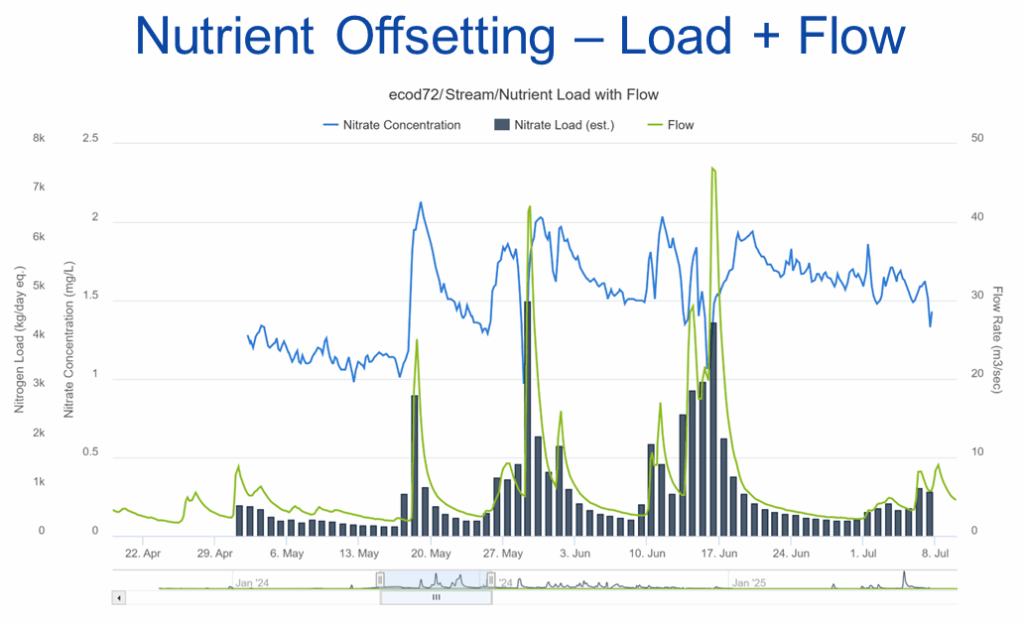
“I think measurement is the foundation of credibility,” Harcourt said. “Without high-frequency, independent data, there is no trust. Our technology captures nutrient flows at the scale required to underpin trading, so that every credit rests on actual improvements in water quality.”
For more information on how Eco Detection can help with your water quality and nutrient trading please contact us 1800 ECO DET.